
Blog ·
From Pop Lyrics to Real Talk. How Lily Allen’s Latest Album Got Our Family Talking about Relationships and Sex (RSE).
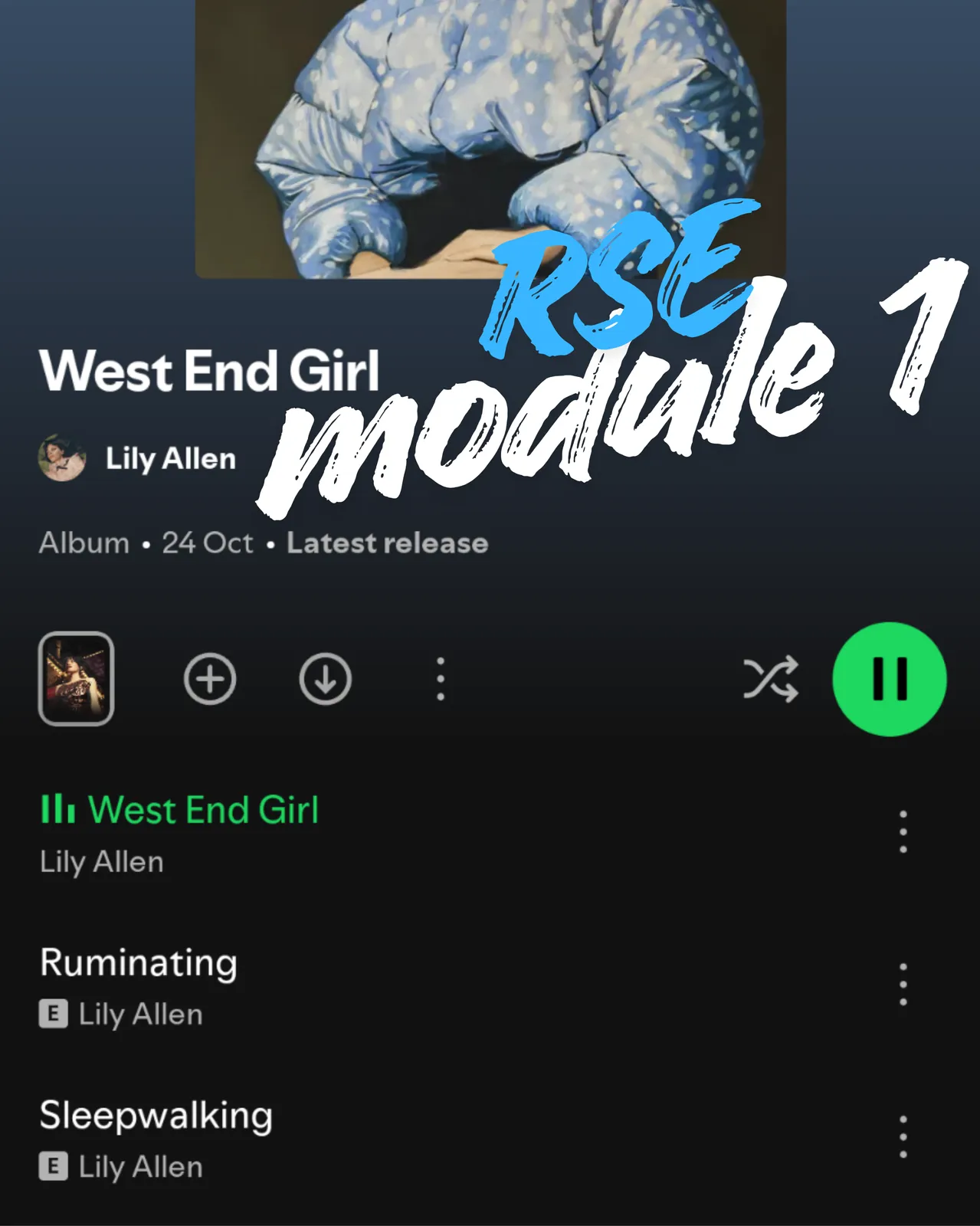
Album Cover by @nievesgonnzalez (opens in a new tab)
West End Girl, Lily Allen’s latest album explores her broken relationship with actor David Harbour. From buying their first house to Lily’s new acting role, jealousy and infidelity, she shares the rollercoaster of emotions she experienced as she came to terms with the double life of her husband. Her teenage daughters are also mentioned a few times in the album.
“The girls are looking at me, to teach them all about love. But I can’t seem to hold my shit together long enough”
Relapse
Little did Lily Allen know (or maybe she did) that in writing this album she was teaching her teenage daughters the most important lessons in love and in releasing it, sharing those same lessons with millions around the world.
“‘I can’t trust anything that comes out of his mouth’ obvs been listening to Madeline ALOT”
“It’s literally in my head nonstop”
“What a fucking line line line, what a fucking line line line!”
“She’s a genius”
These are just a few of the texts I have received from friends over the past few days. It has been a half term of millennials suddenly crashing hard back into the early ‘noughties’. I still haven’t worked out exactly why we have all fallen so heavily for this album but amongst my friends and family we are all in a bit of a codependent relationship with it, bordering on obsession. When I approach the final track it mirrors the end of an unhealthy relationship - I am broken and needing to draw a line under it, despite not quite wanting to. I feel urged to start all over again in a masochistic way, repeating over and over until there is an intervention - a request to ‘please, take a breather’.
This album conjures painful memories of relationships past, ones that have been locked away somewhere as we adjust to parenting, move to the suburbs or attempt to look like we have our shit together - the nostalgic melodies and compelling narratives leave us feeling haunted - uncomfortable details bubbling to the surface. A pool overflowing with regret, pain, vulnerability and naivety. Lily explores our efforts to keep things fresh (despite getting older) alongside the challenging admittance that actually, we just want a simple life. It is a thorough examination of heartbreak neatly packed into 44 minutes of evocative memoir. This album is a public acknowledgment - telling your truth is the way to relieve yourself from suffering caused by another.
My addiction to West End Girl has meant that my children (8 and 12) couldn’t have avoided the hype, even if they wanted to. Curiosity regarding the album content and conversation focused on healthy relationships has been entirely welcome, although unexpected. My children have now listened to the album in all its glory (I am not sure the radio edit would pack the same punch) and I am comfortable with this. I have already put in a lot of groundwork and laid the foundations for this kind of exploration through open conversation around sex and relationships.
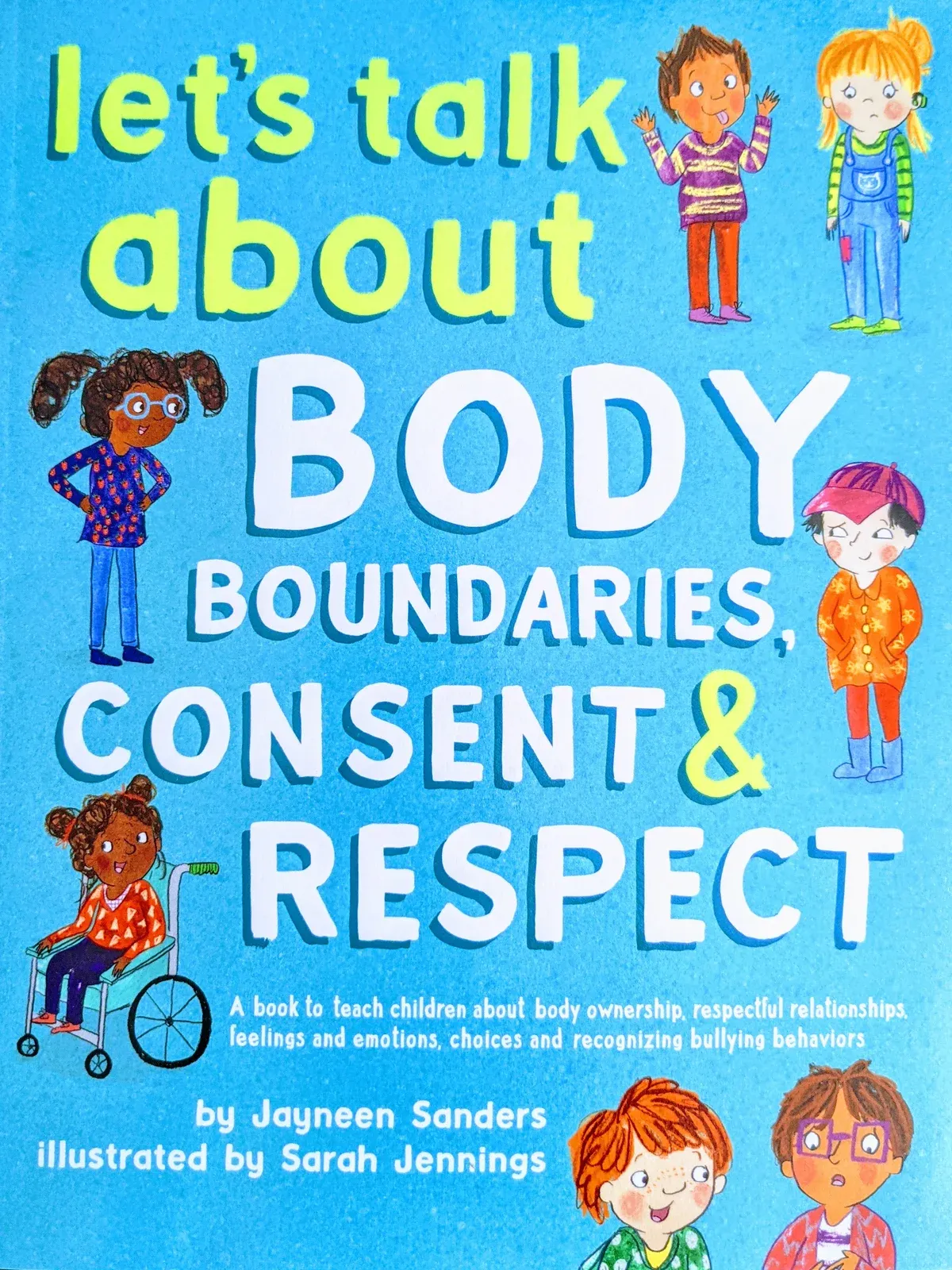
Find more of our book recommendations here.
Through our shared (and age appropriate) exploration of certain tracks, a number of themes have taken shape, this is my Relationship and Sex Education (RSE) track listing:
Feeling threatened by your partners success
West End Girl
“And you found us a brownstone, said ‘You want it? It’s yours’”
This track prompted discussion about falling in love and what that can feel like. Lily’s mention of being bought a house and not being in a position to afford a specific lifestyle sparked discussion about buying love or feeling a duty to repay in other ways.
As she introduces the idea of her partner’s jealousy (Harbour wrote the most unusual note to her on her opening night in the West End (opens in a new tab)) we talked about being each other’s cheerleaders. My son responded “he’s jealous of her”. We discussed what it means when we feel jealous of our partner’s achievements? How might we challenge these feelings and think about our own pain and vulnerabilities? I wanted to make clear that this feeling is not necessarily something to be ashamed of (we are human) but the way you respond to that feeling is what is important - it’s not about the other person, so don’t make it their responsibility to sort this out for you. Own it.
On this note we contemplated how this affects the other person in the relationship and how it can feel, for women in particular. The guilt often associated with career driven women leading to an attempt to be less present for themselves and more present for others - detrimental for all in a family.
Finally we addressed the underlying message for women specifically, to quieten down and keep under the radar - not stealing his limelight.
Relationship Anxiety
Ruminating
“You told me that you felt the same, it’s mutual. And then you came out with this line so crucial. Yeah, ‘If it has to happen, baby do you want to know?’”
We discussed our responses to what others are asking of us - what if we begin to feel disappointed in ourselves for not living up to their expectations and try to change ourselves for others - compromise can be helpful but compromising who you are, is not.
The main message? If a relationship is making you feel anxious we need to take a pause and reflect on why? and Is it beneficial to stick around?
Infidelity, Relationship Options, Consent and Boundaries
Madeline and Tennis
“Who the fuck is Madeline?”
“But didn’t she say yes to an open relationship?” my daughter asked and so came the explorations of boundaries and consent. Not only how we clearly communicate them to others but doing the work to really understand our own - knowing, for sure, what they are in the first place.
We also discussed how we listen to and respond to others when they share their boundaries with us including the important message that these can change at any given moment - Lily might well have said yes to an open relationship to begin with but her discomfort with it may have been communicated in several non-verbal ways - being able to notice and respond to those cues is vital in any relationship.
As we listened to the texts from ‘Madeline’ we spoke about lies within relationships (the realities and pressures) but also the disrespectful treatment of another when these boundaries are so brazenly ignored. My son looked concerned at the prospect of getting this wrong - this was an important moment - his communication of concern allowed for me to explore the reality and very human prospect of making mistakes and how this might differ from the ignorance and arrogance of Harbours apparent behaviour.
We are going to get it wrong sometimes - the question is, are you being respectful? If the answer is yes then the path is clear to progress.
Addiction and Negative Behaviours
Relapse
“If I relapse, I know I stand to lose it all. Can you bring me back, when I ‘m climbing up the walls?”
We spoke about addiction (again not a new topic in my family home). I shared what Lily’s addictions were and the suggestion that she makes regarding David Harbour’s possible addiction. We spoke about ways we might manage more challenging moments without turning to our addictions to get us through.
“Did she drink again?” asks my son - the fact that Lily Allen has responded in this creative way - by writing this album rather than turning to alcohol is a positive message that responding rather than reacting is a possibility, despite being difficult. Creative processes are usually extremely positive and enlightening
We discussed the importance of speaking openly about strategies that work for us when we experience life’s challenges and also working out our limitations. Avoiding allowing others to send us to an adverse place through their own negative behaviour patterns, where we are set to lose more.
Sex and Consent
Pussy Palace
“I found a shoebox full of handwritten letters. From brokenhearted women wishing you could have been better”
Please note that my children already understand what sex is and we speak openly about it, I wouldn’t advise this track if it is your child’s first encounter with it.
We spoke about infidelity and explored the complexities in discovering someone who meets your needs, respects your boundaries and agrees to consensual acts of touch and connection. This was delivered in a factual and age appropriate way. A conversation that has been aided by the fact that from the moment they were born I have respected their boundaries, asked them if they would like a hug or a kiss and respect a ‘no’ if it comes my way.
We also spoke about power imbalances with consent - I have always explained that it doesn’t matter who asks - a nan, an aunt, a best friend, a teacher or a parent - if you do not wish to be hugged that is your prerogative.
Relationship Options
Nonmonogamummy
“I’m so committed that I’d lose myself, Because I don’t want to lose you”
My daughter loved the title of this one - as I explained the term she thoroughly enjoyed the play on words. We discussed the definitions of monogamous and polyamorous.
“So she was married when he asked for an open relationship, he should have asked before” states my daughter*.* This sparked discussion regarding theconversations that should happen at the beginning of a relationship (and before marriage or a relationship becomes serious or longterm). We acknowledged that an agreement should be made between all parties in the relationship as to how many people will be invited into it.
Further conversation took place about power imbalances and in relation to relationship decision making. I explained that David Harbour was a man (already having more power, as we live in a patriarchy), is older and a Hollywood star - both adding further status and power. When I explained this unequal balance I asked my 12 year old son - “what do you think this meant for the decision that Lily had to make about being in an open relationship?” and he answered “she will feel pressured”. He got it.
Online dating
Dallas Major
“My name is Dallas Major and I’m coming out to play”
We spoke about dating apps, online names and profiles, and making decisions that we are comfortable with both on and offline. As the children recognised that their nan was on a dating app we spoke about different generations and varied comfort levels with online dating - being mindful of this when we meet people online and ensuring we are not taking advantage of others’ inexperience.
We also spoke about not knowing who is behind a profile and how we might safely meet people we connect with online. We explored the ages that it might be appropriate to be on dating apps and meet people.
Feeling loved
Beg For Me
“I want to feel held, I want to be told I’m special…”
My daughter’s immediate (and beautiful) words in response to this song were simply, “she wants him to love her”. I made it quite clear that we must avoid our worth being determined by others. We talked about the word ‘validation’ and about our own deep self-validation rather than seeking that of others despite this being extremely difficult sometimes. We all agreed that all of us want/need to be loved and that everyone deserves love and respect.
Reflection
Let You W/In and Fruityloop
“It’s not me, it’s you and there was nothing I could do”
We know that when we are in unhealthy relationships, a common false sense is that we need to absorb other people’s mistakes and feel shame for other’s shameful behaviour. I explained that feeling we must conceal others’ negative behaviours or worrying about how others view your relationship should never be a priority.
We spoke about the importance of reflecting on our own behaviours, taking responsibility for our own mess ups and ensuring we do not take on the heavy burden for others.
Final Thoughts
As the album wraps up for yet another time I sit and contemplate starting it all over again. I silently ponder what my partner’s reaction might be if I do. This time, I choose to take that breather and endeavour to digest West End Girl and what it means to me and everyone who is enamoured by it.
One certainty is this - Lily Allen has achieved great things with this album but it does not negate the pain she experienced to get here - experiences that shouldn’t have happened in the first place and ironically, are perhaps, less likely to happen with the very conversations it sparks.
Keep talking to your children (and if you haven’t already, listen to the album).
“Love and light.” x
For more tips on speaking to your children about Relationships and Sex please make use of the wonderful Amaze.org (opens in a new tab). They have brilliant short animations and articles that will help you and your family navigate these topics.
Check out our podcast episodes ‘Real Talk on Women’s Health and Sex Education’ and ‘Education to End Gender Inequality and Gendered Violence’